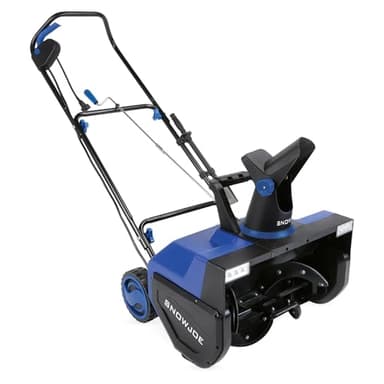
Plug it in the four times a year you need it; 22 inches clears the driveway fast and it hangs on the wall the rest of the time.
Read full reviewBuy on Amazon
$249.99on Amazon
Price as of Oct 15, 11:27 PM ET — subject to change.
Use-case guide · 2026
If your area sees three to six storms a year and most are under 6 inches, a big gas machine spends 360 days a year taking up garage space and going stale. The right approach is cheap, light, and maintenance-free: a corded or small cordless single-stage, a wide pusher, or both — tools you grab in a minute and forget the rest of the year.
We may earn a commission from Amazon links on this page — at no extra cost to you. How this works
Recommended class
Single-stage electric (corded or small cordless) — or a pusher
Avoid
Gas engines that sit 11 months and won't start the one morning you need them
Not sure which class fits? Run your driveway through the snow blower sizer →
Plug it in the four times a year you need it; 22 inches clears the driveway fast and it hangs on the wall the rest of the time.
$249.99on Amazon
Price as of Oct 15, 11:27 PM ET — subject to change.
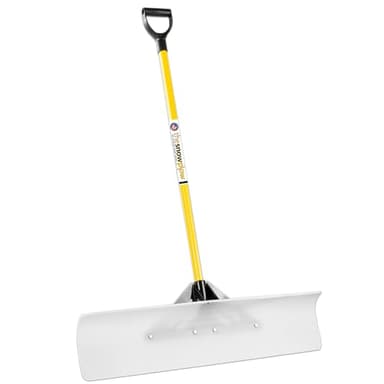
For 2–5 inch storms on a paved driveway, a wide pusher is faster than a snow blower and costs $76.
$79.99on Amazon
Price as of Oct 15, 11:27 PM ET — subject to change.
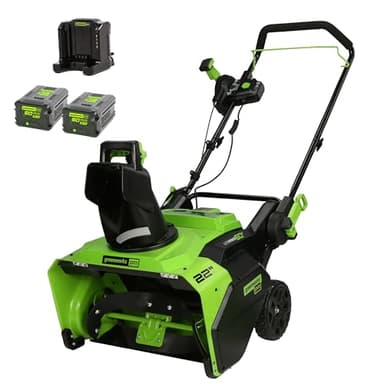
Two 5Ah batteries and a 22-inch path for $500 — no cord, no gas, and the batteries run Greenworks yard tools the other 11 months.
$699.99on Amazon
Price as of Oct 15, 11:27 PM ET — subject to change.
A $150–$300 electric single-stage pays for itself in saved back pain and time on the first real storm, and has no upkeep between uses. A $1,200 gas two-stage usually isn't worth it at that frequency.
For paved driveways and storms under 5–6 inches, yes — a 36-inch pusher is faster and nearly effortless. Pair it with a scoop shovel for piles and you're covered for most light-snow winters.